Introduction
In today’s fast-paced global economy, businesses are no longer limited by borders. From small startups to multinational corporations, everyone is involved in buying and selling goods across countries. But with this expansion comes a critical challenge — knowing exactly where your shipment is at any given time.
This is where shipment tracking becomes not just useful, but essential.
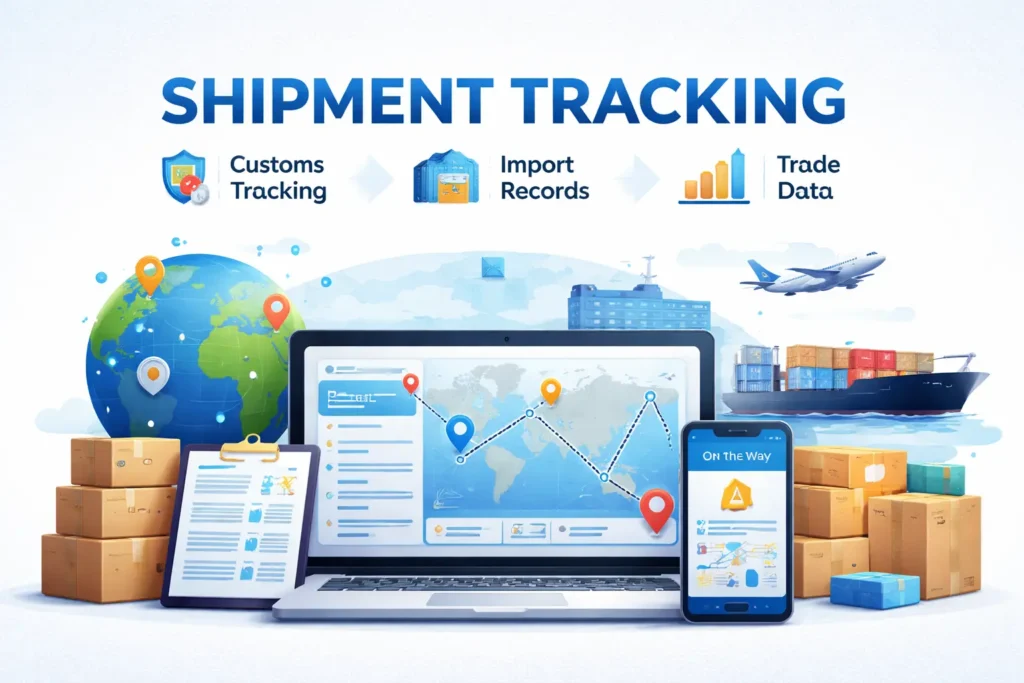
Whether you’re an importer waiting for raw materials or an exporter ensuring timely delivery to clients, real-time tracking provides transparency, control, and peace of mind. But modern tracking is no longer limited to simple location updates — it has evolved into a powerful system supported by customs shipment tracking, export import statistics, import records, and detailed trade data.
In this blog, we’ll explore how shipment tracking works, why it matters, and how businesses can leverage trade intelligence to gain a competitive edge.
What is Shipment Tracking?
At its core, shipment tracking is the process of monitoring the movement of goods from origin to destination. It allows businesses and customers to track shipments in real-time using tracking numbers, GPS systems, and digital platforms.
Key Features:
- Real-time location updates
- Estimated delivery timelines
- Status notifications (in transit, customs clearance, delivered)
- Carrier and route details
Shipment tracking helps eliminate uncertainty and improves decision-making across the supply chain.
The Role of Customs Shipment Tracking
One of the most crucial stages in international shipping is customs clearance. Delays at this stage can lead to financial losses, missed deadlines, and unhappy clients.
This is where customs shipment tracking plays a vital role.
Why It Matters:
- Provides visibility into customs processes
- Helps identify delays or documentation issues
- Ensures compliance with international regulations
- Speeds up clearance procedures
With customs tracking, businesses can proactively resolve issues like missing documents, incorrect declarations, or regulatory checks.
Understanding Export Import Statistics
While tracking tells you where your shipment is, export import statistics tell you what’s happening in the market.
These statistics include:
- Volume of goods traded between countries
- Top exporting and importing nations
- Product demand trends
- Seasonal trade patterns
Benefits for Businesses:
- Identify high-demand markets
- Analyze competitors’ performance
- Plan inventory and logistics
- Make data-driven decisions
For example, if export import statistics show a surge in demand for a product in a particular country, exporters can adjust their strategy to capitalize on that opportunity.
Importance of Import Records
Import records provide detailed information about goods entering a country. These records include:
- Importer and exporter details
- Product descriptions
- Quantity and value
- Shipment dates and ports
How Businesses Use Import Records:
- Lead generation for B2B businesses
- Competitor analysis
- Supplier identification
- Market research
For instance, if you’re a supplier, import records can help you find companies that regularly import your type of product — making them potential clients.
Leveraging Trade Data for Business Growth
Trade data is a powerful asset that combines information from shipments, customs, and global trade activities.
What Trade Data Includes:
- Shipment tracking details
- Import/export transactions
- Customs declarations
- Market trends
Why It’s Valuable:
- Helps predict market demand
- Enables smarter pricing strategies
- Improves supply chain efficiency
- Identifies new business opportunities
Companies that use trade data effectively can stay ahead of competitors and make proactive business decisions instead of reactive ones.
How Shipment Tracking Enhances Supply Chain Efficiency
Modern supply chains are complex, involving multiple stakeholders — suppliers, manufacturers, logistics providers, and customers.
Here’s how shipment tracking improves efficiency:
1. Transparency
Every stakeholder can access real-time updates, reducing confusion and miscommunication.
2. Better Planning
Businesses can plan production, inventory, and delivery schedules based on accurate shipment data.
3. Risk Management
Tracking helps identify delays, route disruptions, or customs issues early.
4. Customer Satisfaction
Customers receive timely updates, building trust and improving experience.
Challenges in Shipment Tracking
Despite its advantages, shipment tracking comes with challenges:
❌ Data Inaccuracy
Sometimes tracking information may not update in real-time.
❌ Multiple Systems
Different carriers use different tracking systems, making integration difficult.
❌ Customs Delays
Even with tracking, customs clearance can still be unpredictable.
❌ Lack of Standardization
Global logistics lacks a unified tracking standard.
Future of Shipment Tracking
The future of shipment tracking is being shaped by advanced technologies:
🚀 AI and Machine Learning
Predict delays and optimize routes.
📦 IoT (Internet of Things)
Sensors provide real-time condition monitoring (temperature, humidity).
🔗 Blockchain
Ensures secure and transparent transaction records.
📊 Big Data Analytics
Enhances insights using export import statistics and trade data.
These innovations will make tracking faster, smarter, and more reliable.
Best Practices for Businesses
To fully benefit from shipment tracking and trade insights, businesses should:
✔ Use Integrated Platforms
Choose tools that combine shipment tracking, import records, and trade data.
✔ Monitor Customs Closely
Leverage customs shipment tracking to avoid delays.
✔ Analyze Market Trends
Use export import statistics to identify growth opportunities.
✔ Build Strong Logistics Partnerships
Work with reliable shipping and tracking providers.
Conclusion
In the modern global trade environment, shipment tracking is no longer optional — it’s a necessity. It not only ensures smooth logistics but also empowers businesses with valuable insights when combined with customs shipment tracking, export import statistics, import records, and trade data.
Companies that embrace these tools gain a significant advantage:
- Better visibility
- Improved efficiency
- Stronger decision-making
- Higher customer satisfaction
As technology continues to evolve, shipment tracking will become even more powerful, transforming the way businesses operate in the global marketplace.
FAQs (Frequently Asked Questions)
1. What is shipment tracking?
Shipment tracking is the process of monitoring the real-time movement of goods from origin to destination using tracking numbers and digital systems.
2. How does customs shipment tracking work?
Customs shipment tracking provides updates about your shipment during customs clearance. It helps identify delays, document issues, and ensures compliance with international trade regulations.
3. Why are import records important for businesses?
Import records help businesses analyze competitors, find potential clients, identify suppliers, and understand market demand through detailed shipment data.
4. What are export import statistics used for?
Export import statistics are used to analyze global trade trends, identify high-demand products, track country-wise trade flow, and make data-driven business decisions.
5. How can trade data improve business growth?
Trade data helps businesses:
- Identify new markets
- Understand customer demand
- Optimize pricing strategies
- Improve supply chain efficiency
6. Is shipment tracking accurate in real-time?
Most modern tracking systems provide real-time updates, but accuracy may vary depending on the shipping carrier, location, and customs processes.
7. What tools are used for shipment tracking?
Businesses use logistics platforms, courier tracking systems, GPS-enabled tools, and trade data platforms to track shipments efficiently.
8. Can small businesses benefit from shipment tracking?
Yes, shipment tracking helps small businesses improve delivery reliability, reduce risks, and enhance customer satisfaction.