Introduction: Why Businesses Need Smarter Trade Solutions
In today’s fast-moving global economy, businesses are no longer limited by borders. Whether you’re a small trader or a large enterprise, entering the international market has become easier than ever. However, managing global trade operations is still complex — involving documentation, compliance, logistics, supplier coordination, and market research.
This is where import export software becomes a game-changer.
Instead of handling spreadsheets, paperwork, and manual processes, businesses are now shifting towards digital solutions that streamline everything from data management to shipment tracking. With the right tools, companies can reduce errors, save time, and scale faster in international markets.
What is Import Export Software?
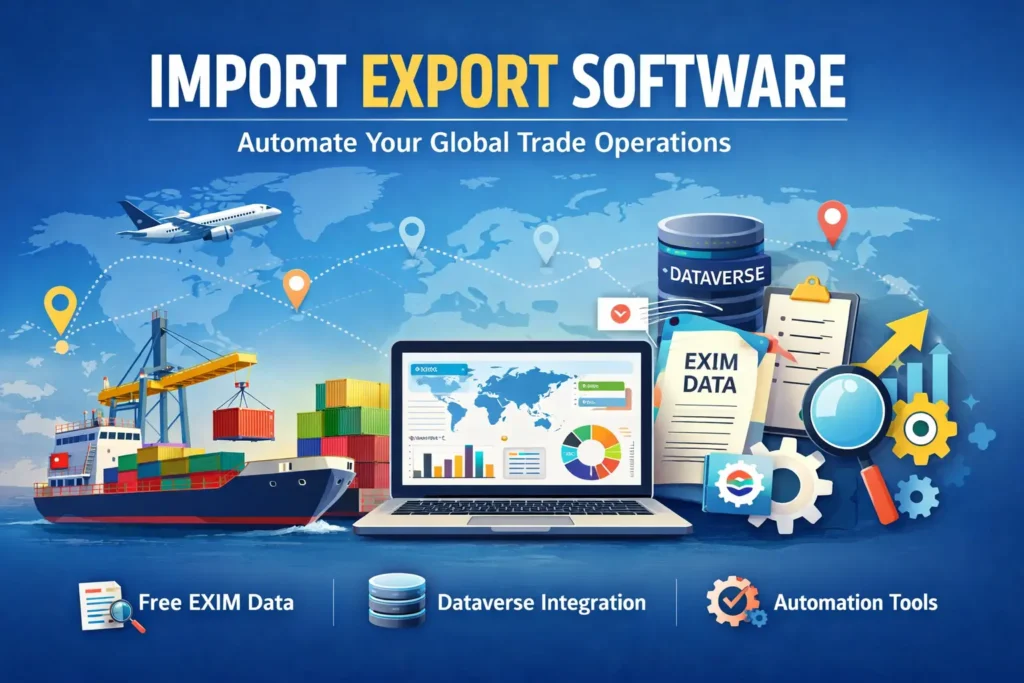
Import export software is a digital solution designed to manage and automate international trade operations. It helps businesses handle:
- Documentation (Invoices, Bills of Lading, Shipping Docs)
- Compliance & regulations
- Shipment tracking
- Supplier and buyer management
- Trade data analysis
In simple terms, it replaces manual processes with smart automation.
Why Businesses Are Switching to Automation Tools
Manual trade operations are time-consuming and prone to errors. With increasing competition, companies need faster and more efficient systems.
Key Benefits of Automation Tools
1. Time-Saving Operations
Automation tools eliminate repetitive tasks like data entry, document generation, and tracking updates.
2. Error Reduction
Human errors in trade documentation can lead to heavy penalties. Automation ensures accuracy.
3. Better Decision Making with Data
With integrated dataverse systems, businesses can store, analyze, and use trade data effectively.
4. Improved Compliance
Import-export regulations vary by country. Software helps stay compliant with updated rules.
Role of Dataverse in Import Export Software
A dataverse acts as a centralized database where all your trade-related data is stored securely.
How Dataverse Helps:
- Organizes import-export records
- Stores supplier and buyer details
- Tracks shipment history
- Provides analytics for growth
This structured data allows businesses to make smarter decisions and identify profitable markets.
Using Free EXIM Data for Market Research
One of the biggest advantages of modern tools is access to free EXIM data.
What is EXIM Data?
EXIM (Export-Import) data provides insights into:
- Who is importing/exporting what
- Trade volumes
- Market demand
- Competitor analysis
Benefits of Free EXIM Data:
- Find reliable buyers and suppliers
- Analyze competitor strategies
- Discover trending products
- Identify new market opportunities
When integrated into import export tools, this data becomes even more powerful.
Top Features to Look for in Import Export Tools
Not all tools are the same. When choosing software, look for features that truly support your business.
Essential Features:
- Automated Documentation
- Real-Time Shipment Tracking
- Customs Compliance Support
- Data Analytics Dashboard
- Integration with Dataverse
- Access to Free EXIM Data
- Multi-Currency & Multi-Language Support
These features ensure your operations run smoothly and efficiently.
How Import Export Software Improves Business Growth
Using import export software is not just about convenience — it directly impacts your growth.
1. Faster Operations
Automation speeds up order processing and shipment handling.
2. Cost Reduction
Less manual work means lower operational costs.
3. Better Market Insights
With free EXIM data and analytics, businesses can target the right markets.
4. Scalability
As your business grows, software adapts without increasing workload.
Automation Tools: The Future of Global Trade
The future of international trade is digital. Companies that adopt automation tools early gain a competitive advantage.
Emerging Trends:
- AI-powered trade analytics
- Smart documentation systems
- Cloud-based dataverse integration
- Predictive demand forecasting
These technologies are transforming how businesses operate globally.
Common Challenges Without Import Export Software
If you’re still managing operations manually, you may face:
- Delayed shipments
- Documentation errors
- Compliance risks
- Poor data management
- Missed business opportunities
This is why switching to modern import export tools is no longer optional — it’s essential.
Conclusion: Transform Your Trade Business Today
Global trade is full of opportunities — but only for those who are prepared.
By using import export software, businesses can automate operations, leverage dataverse for data management, and utilize free EXIM data to stay ahead of competitors.
If you want to grow faster, reduce risks, and operate efficiently, now is the time to invest in the right automation tools.
FAQs
1. What is import export software used for?
It is used to manage and automate international trade operations like documentation, tracking, and compliance.
2. Is free EXIM data useful for small businesses?
Yes, it helps identify buyers, suppliers, and market trends without additional cost.
3. What is dataverse in import export tools?
It is a centralized data system that stores and manages trade-related information.
4. Can automation tools reduce errors?
Yes, automation minimizes human errors and improves accuracy.
5. Is import export software expensive?
Costs vary, but many tools offer scalable pricing suitable for small and large businesses.