Why Country Wise Trade Data is a Game-Changer for Businesses
In today’s fast-moving global economy, success in international trade is no longer based on guesswork—it’s driven by data-backed decisions. Whether you are an exporter, importer, startup, or large enterprise, understanding country wise trade data can completely transform how you do business.
Imagine knowing exactly:
- Which country is importing your product the most
- Where competition is low but demand is high
- Which markets are growing rapidly
This is the power of trade intelligence.
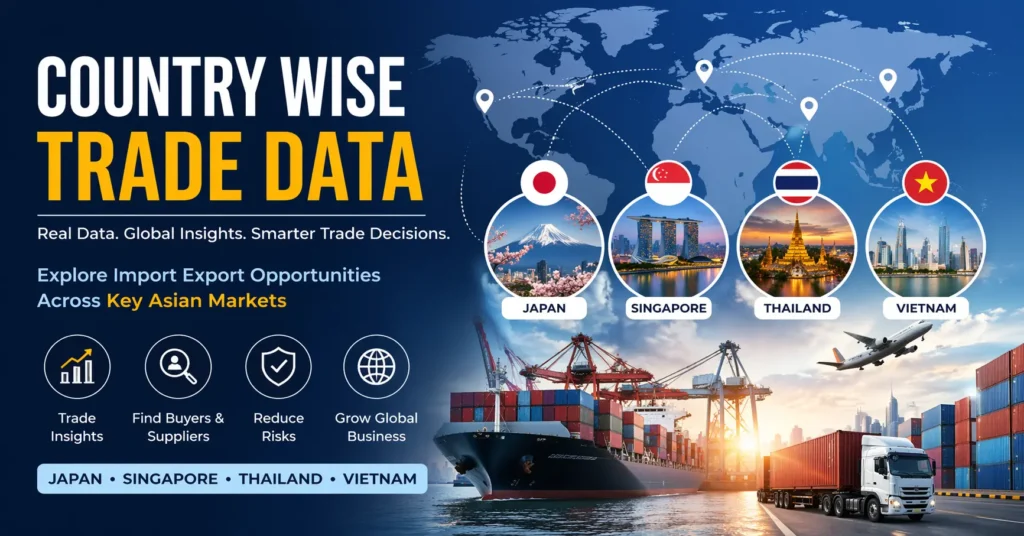
With increasing globalization, countries like Japan, Singapore, Thailand, and Vietnam have become major trade hubs. Businesses that leverage accurate import-export data from these countries gain a strong competitive advantage.
Understanding Country Wise Trade Data in Detail
What is Country Wise Trade Data?
Country wise trade data refers to detailed information about imports and exports between countries. It includes:
- Product details (HS codes)
- Quantity and value of goods
- Importers and exporters
- Shipment details
- Trade trends over time
This data helps businesses analyze international markets and identify profitable opportunities.
Why Trade Data is Important for Import-Export Businesses
Using trade data is no longer optional—it’s essential. Here’s why:
✅ Market Research Made Easy
You can identify which countries are actively trading your product.
✅ Find Verified Buyers & Suppliers
Access real importer/exporter details to generate leads.
✅ Competitor Analysis
Track what your competitors are exporting and where.
✅ Risk Reduction
Avoid entering saturated or declining markets.
Country-Wise Import Export Insights
Let’s explore the trade potential of your target countries:
Japan Import Export Data
Japan is one of the world’s largest economies with a strong demand for:
- Machinery
- Electronics
- Automotive parts
- Food products
📊 Key Insights:
- High import demand for raw materials and food
- Strong export market for technology products
- Strict quality standards
👉 If you’re targeting Japan import export, focus on high-quality products and compliance.
Singapore Import Export Data
Singapore is a global trading hub with excellent logistics and connectivity.
📊 Key Insights:
- Major re-export center
- High demand for electronics, chemicals, and petroleum
- Business-friendly environment
👉 Singapore import export data is ideal for businesses looking to expand in Southeast Asia.
Thailand Import Export Data
Thailand has a rapidly growing economy and strong industrial base.
📊 Key Insights:
- Major exporter of automobiles and electronics
- Imports machinery, chemicals, and raw materials
- Growing e-commerce and retail sector
👉 Thailand import export data helps identify opportunities in manufacturing and retail.
Vietnam Import Export Data
Vietnam is emerging as a global manufacturing powerhouse.
📊 Key Insights:
- Strong export growth in textiles, electronics, and furniture
- Increasing imports of machinery and raw materials
- Attractive destination for foreign investment
👉 Vietnam import export data is perfect for businesses looking for fast-growing markets.
How to Use Country Wise Trade Data Effectively
To get the most out of trade data, follow these steps:
1. Identify High-Demand Products
Look for products with consistent import growth.
2. Analyze Target Countries
Focus on countries with strong demand and less competition.
3. Generate Leads
Extract importer/exporter details for outreach.
4. Track Market Trends
Monitor seasonal and yearly trade patterns.
5. Optimize Pricing Strategy
Understand pricing trends to stay competitive.
Tools & Sources for Trade Data
You can access country wise trade data through:
- Government trade portals
- Import-export databases
- Trade analytics platforms
Using the right tool ensures accurate and actionable insights.
Start Leveraging Trade Data Today
If you want to succeed in global trade, relying on assumptions is not enough. You need real, actionable insights—and that’s exactly what country wise trade data provides.
By analyzing:
- Japan import export
- Singapore import export
- Thailand import export
- Vietnam import export
You can:
✔ Discover profitable markets
✔ Find genuine buyers and suppliers
✔ Scale your import-export business globally
Final Thoughts
The future of international business belongs to those who make data-driven decisions. Whether you’re just starting or already in the import-export industry, using country wise trade data will help you stay ahead of the competition.
FAQs
1. What is country wise trade data?
Country wise trade data is detailed information about imports and exports between countries, including product type, quantity, value, and trading partners. It helps businesses analyze global trade trends and identify opportunities.
2. How can I use trade data for my import-export business?
You can use trade data to find high-demand products, identify potential buyers and suppliers, analyze competitors, and choose the best countries for trade expansion.
3. Why is Japan import export data important?
Japan import export data helps businesses understand demand for high-quality products, machinery, and food items, making it easier to enter one of the world’s largest economies.
4. What makes Singapore a global trade hub?
Singapore’s strategic location, advanced logistics, and business-friendly policies make it a key center for international trade and re-export activities.
5. Is Vietnam a good country for export business?
Yes, Vietnam is one of the fastest-growing export economies, especially in textiles, electronics, and furniture, offering great opportunities for global traders.
6. How do I find buyers using country wise trade data?
You can extract importer details, analyze shipment records, and directly connect with verified buyers using trade databases and analytics tools.
7. Which country is best for import-export business in Asia?
Countries like Japan, Singapore, Thailand, and Vietnam are highly profitable due to strong trade networks, growing economies, and high demand for goods.
8. Where can I get reliable import export data?
You can access trade data through government portals, private trade intelligence platforms, and global import-export databases.