Understanding the Power of Data in International Trade
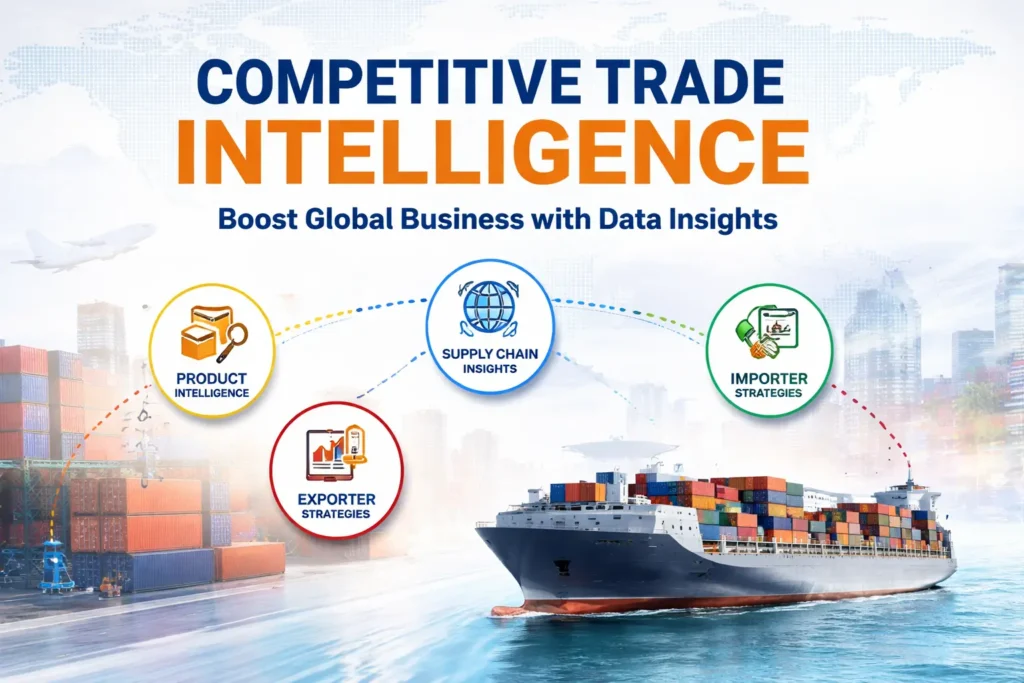
In today’s hyper-connected global economy, businesses are no longer competing only within their local markets—they are competing worldwide. Whether you are an exporter trying to enter new markets or an importer sourcing the best products, one factor separates successful companies from struggling ones: competitive trade intelligence.
This is where competitive trade intelligence becomes a game-changer.
Imagine having access to real-time insights about your competitors, market trends, pricing strategies, and supply chain movements. Instead of making decisions based on guesswork, you rely on data-driven strategies that give you a competitive edge. This is not just an advantage—it’s a necessity in the modern business of international trade.
What is Competitive Trade Intelligence?
Competitive trade intelligence refers to the process of collecting, analyzing, and using global trade data to make smarter business decisions. It involves understanding:
- Who your competitors are
- Where they are exporting/importing
- What products are in demand
- Pricing trends in different markets
- Supply chain movements
This intelligence helps businesses reduce risk, identify opportunities, and maximize profitability.
Why Competitive Trade Intelligence Matters Today
Global trade is more complex than ever. Changing regulations, fluctuating demand, and evolving customer expectations make it difficult to stay ahead.
Here’s why businesses must adopt trade intelligence:
1. Better Market Entry Strategies
Instead of entering a market blindly, you can analyze demand, competitors, and pricing before making a move.
2. Improved Decision-Making
Data-backed decisions reduce risks and increase success rates.
3. Competitive Advantage
You stay one step ahead by knowing what your competitors are doing.
4. Cost Optimization
Understanding supply chains helps reduce logistics and sourcing costs.
Product Intelligence for Exporters: Unlocking New Opportunities
For exporters, success depends on identifying the right product and the right market. This is where product intelligence for exporters plays a crucial role.
What is Product Intelligence?
It involves analyzing global demand, pricing trends, and buyer behavior for specific products.
How It Helps Exporters
- Identify high-demand products in international markets
- Discover profitable pricing strategies
- Analyze competitor product performance
- Find reliable buyers and distributors
Example
An exporter dealing in textiles can use product intelligence to identify which countries are importing more cotton garments, what price range is trending, and who the major buyers are.
This reduces trial-and-error and increases the chances of success.
Supply Chain Intelligence: The Backbone of Global Trade
A strong supply chain is the foundation of successful international trade. Without proper planning and visibility, businesses face delays, increased costs, and inefficiencies.
This is where supply chain intelligence comes in.
What is Supply Chain Intelligence?
It refers to analyzing logistics, shipping routes, supplier networks, and inventory flow using data.
Benefits of Supply Chain Intelligence
- Real-time tracking of shipments
- Identification of supply chain bottlenecks
- Cost reduction through optimized routes
- Better supplier selection
Why It Matters
In global trade, even a small delay can lead to huge losses. Supply chain intelligence ensures smooth operations and timely delivery.
Intelligence for Importers: Smarter Sourcing Decisions
Importers face multiple challenges such as finding reliable suppliers, negotiating prices, and ensuring product quality.
Using intelligence for importers, businesses can:
1. Identify Reliable Suppliers
Access data about supplier history, export volumes, and credibility.
2. Compare Pricing
Analyze global price trends to avoid overpaying.
3. Reduce Risk
Verify suppliers before making bulk purchases.
4. Improve Negotiation Power
Data gives you leverage during price discussions.
Real Impact
Instead of relying on random suppliers, importers can make strategic sourcing decisions backed by real data.
The Role of Data in the Business of International Trade
The business of international trade is no longer driven by intuition—it is powered by data.
Key Areas Where Data Plays a Role
- Market research
- Competitor analysis
- Pricing strategies
- Demand forecasting
- Risk management
How Trade Intelligence Transforms Businesses
Businesses that use trade intelligence:
- Expand faster into global markets
- Minimize losses
- Build stronger partnerships
- Achieve long-term growth
How to Use Competitive Trade Intelligence Effectively
Simply having data is not enough—you need to use it strategically.
Step 1: Define Your Goals
Are you looking to expand, reduce costs, or find new suppliers?
Step 2: Analyze Market Trends
Study demand, pricing, and competitor activities.
Step 3: Monitor Competitors
Track their shipments, markets, and product strategies.
Step 4: Optimize Supply Chain
Use insights to improve logistics and reduce delays.
Step 5: Make Data-Driven Decisions
Implement strategies based on real insights, not assumptions.
Challenges in Using Trade Intelligence
While trade intelligence offers many benefits, businesses may face challenges such as:
- Lack of access to reliable data
- Difficulty in data interpretation
- High cost of tools and platforms
- Rapidly changing global markets
However, with the right approach and tools, these challenges can be overcome.
Future of Competitive Trade Intelligence
The future of trade intelligence is driven by advanced technologies like:
1. Artificial Intelligence (AI)
AI helps analyze large datasets quickly and accurately.
2. Big Data Analytics
Provides deeper insights into global trade patterns.
3. Automation
Reduces manual effort and improves efficiency.
4. Predictive Analytics
Helps forecast future trends and demand.
Businesses that adopt these technologies will lead the global market.
Why Your Business Needs Trade Intelligence Now
If you are involved in importing or exporting, ignoring trade intelligence is no longer an option.
Without it, you risk:
- Losing to competitors
- Entering the wrong markets
- Paying higher costs
- Missing profitable opportunities
With it, you gain:
- Clarity
- Confidence
- Competitive advantage
- Sustainable growth
Conclusion: Turn Data into Your Competitive Advantage
In the evolving world of global commerce, competitive trade intelligence is not just a tool—it is a strategic necessity.
Whether you are focusing on product intelligence for exporters, improving supply chain intelligence, leveraging intelligence for importers, or scaling your business of international trade, data is your most valuable asset.
The businesses that succeed tomorrow are the ones that make smarter decisions today.
Final Thought (Action Step)
Start leveraging trade intelligence now:
- Analyze your competitors
- Understand your market
- Optimize your supply chain
- Make data-driven decisions
Because in global trade, knowledge isn’t just power—it’s profit.
FAQs
1. What is competitive trade intelligence?
Competitive trade intelligence is the process of collecting and analyzing global trade data to understand market trends, competitors, pricing, and demand. It helps businesses make informed decisions in international trade.
2. How does product intelligence help exporters?
Product intelligence for exporters helps identify high-demand products, analyze pricing trends, and find the best international markets, increasing the chances of successful exports.
3. What is supply chain intelligence in global trade?
Supply chain intelligence involves tracking and analyzing logistics, suppliers, and shipping data to improve efficiency, reduce costs, and ensure timely delivery of goods.
4. Why is intelligence important for importers?
Intelligence for importers helps businesses find reliable suppliers, compare global prices, reduce risks, and make better purchasing decisions.
5. How can trade intelligence improve the business of international trade?
The business of international trade becomes more efficient and profitable with trade intelligence by enabling data-driven decisions, reducing risks, and identifying new opportunities.
6. What tools are used for trade intelligence?
Businesses use trade databases, analytics platforms, AI tools, and market research software to gather and analyze trade intelligence data.
7. Is competitive trade intelligence useful for small businesses?
Yes, even small businesses can benefit by gaining insights into market trends, competitor strategies, and customer demand, helping them compete globally.