Introduction
In today’s hyper-connected economy, businesses are no longer limited by borders. Whether you’re a startup exploring international markets or an established enterprise scaling globally, one thing is certain—data drives decisions. And when it comes to global trade, nothing is more powerful than global export import trade data.
But here’s the real challenge:
How do you access reliable trade data from hundreds of countries?
How can you analyze global markets without spending months on research?
And most importantly, how can you turn that data into profitable business strategies?
This is where comprehensive trade intelligence becomes your biggest competitive advantage.
What is Global Export Import Trade Data?
Global export import trade data refers to detailed records of goods and services traded between countries. This data includes:
- Importer and exporter details
- Product descriptions (HS codes)
- Shipment quantities and values
- Country-wise trade flows
- Port and logistics information
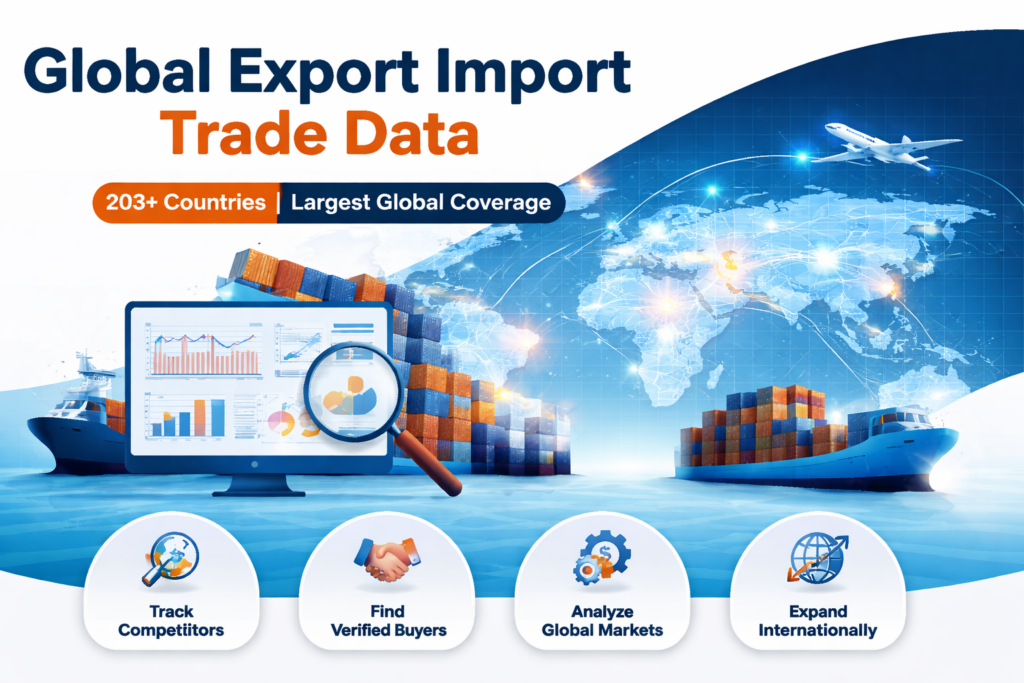
With access to 203 countries trade data, 208 countries trade data, or even 199 countries trade data, businesses can gain a complete view of international trade movements.
Why Businesses Need Global Trade Data
1. Identify New Market Opportunities
Imagine knowing exactly which countries are importing your product the most. With largest global coverage, you can:
- Discover untapped markets
- Analyze demand trends
- Expand strategically
2. Track Competitors Globally
Trade data allows you to:
- Monitor competitor shipments
- Identify their suppliers and buyers
- Understand pricing strategies
This gives you a clear edge in competitive markets.
3. Find Verified Buyers and Suppliers
Using global export import trade data, you can:
- Access real importer/exporter details
- Build reliable B2B connections
- Reduce dependency on middlemen
4. Improve Pricing and Profit Margins
With real-time trade insights:
- Benchmark global prices
- Optimize your pricing strategy
- Maximize profits
Coverage Matters: Why 200+ Countries Data is Powerful
Not all trade data platforms are equal. The real value lies in coverage.
203 Countries Trade Data
Gives you extensive insights into most active global markets, ideal for businesses targeting major economies.
208 Countries Trade Data
Provides near-complete global visibility, helping you track even smaller and emerging markets.
199 Countries Trade Data
Still powerful, offering strong coverage for core international trade routes.
Largest Global Coverage
The broader the database, the better your decisions. With largest global coverage, you can:
- Analyze worldwide trade patterns
- Compare regional demand
- Diversify your export/import strategy
How to Use Global Trade Data Effectively
Step 1: Market Research
Start by identifying:
- Countries importing your product
- Growth trends over time
- Seasonal demand patterns
Step 2: Competitor Analysis
Look at:
- Who your competitors are exporting to
- Their shipment volumes
- Pricing benchmarks
Step 3: Lead Generation
Use trade data to:
- Find genuine buyers
- Build targeted outreach campaigns
- Increase conversion rates
Step 4: Risk Management
Avoid risky markets by analyzing:
- Trade fluctuations
- Political or economic instability
- Import/export restrictions
Key Features to Look for in Trade Data Platforms
When choosing a trade data provider, ensure it offers:
- Access to global export import trade data
- Coverage of 203+ countries trade data
- Updated and accurate records
- Advanced search filters (HS code, country, product)
- User-friendly dashboard
Benefits for Different Industries
Manufacturers
- Expand exports globally
- Identify bulk buyers
- Optimize production planning
Importers
- Find cost-effective suppliers
- Compare global pricing
- Ensure product quality
Traders & Exporters
- Generate high-quality leads
- Track global demand
- Scale faster
Future of Global Trade Data
With AI and automation, the future of global export import trade data is evolving rapidly. Businesses can now:
- Predict market trends
- Automate lead generation
- Use data-driven decision-making
Companies leveraging largest global coverage will always stay ahead in international trade.
Conclusion
In a competitive global marketplace, relying on guesswork is no longer an option. Access to global export import trade data—especially from 203 countries trade data, 208 countries trade data, and 199 countries trade data—empowers businesses to make smarter, faster, and more profitable decisions.
If you want to grow internationally, reduce risks, and outperform competitors, investing in a platform with largest global coverage is not just an option—it’s a necessity.
FAQs (Frequently Asked Questions)
1. What is global export import trade data?
Global export import trade data is detailed information about goods and services traded between countries, including shipment details, importer/exporter names, product descriptions, and trade values.
2. How many countries are covered in global trade data?
Trade data platforms typically provide access to 203 countries trade data, 208 countries trade data, or 199 countries trade data, depending on the provider and database size.
3. Why is largest global coverage important in trade data?
The largest global coverage ensures you get insights from maximum countries, helping you identify new markets, analyze global demand, and make better business decisions.
4. How can I use export import data for business growth?
You can use global export import trade data to:
- Find new buyers and suppliers
- Analyze competitors
- Explore new markets
- Improve pricing strategies
5. Is trade data useful for small businesses?
Yes, even small businesses can benefit from trade data by identifying export opportunities, finding verified leads, and expanding into international markets.
6. What industries use global trade data?
Industries such as manufacturing, retail, logistics, e-commerce, and trading companies widely use trade data to improve their import-export operations.
7. How accurate is global export import trade data?
Accuracy depends on the provider, but reliable platforms offer regularly updated and verified data sourced from customs and government records.