Struggling to Find Genuine Import Export Leads?
In today’s highly competitive global market, finding reliable import export leads is one of the biggest challenges businesses face. Whether you’re a startup exporter, an experienced trader, or a sourcing agent, the success of your business depends on one critical factor—connecting with the right buyers and suppliers at the right time.
Many businesses spend months searching through outdated data, unreliable contacts, or overpriced databases, only to end up with zero conversions. The frustration grows when emails go unanswered, calls are ignored, and deals never materialize.
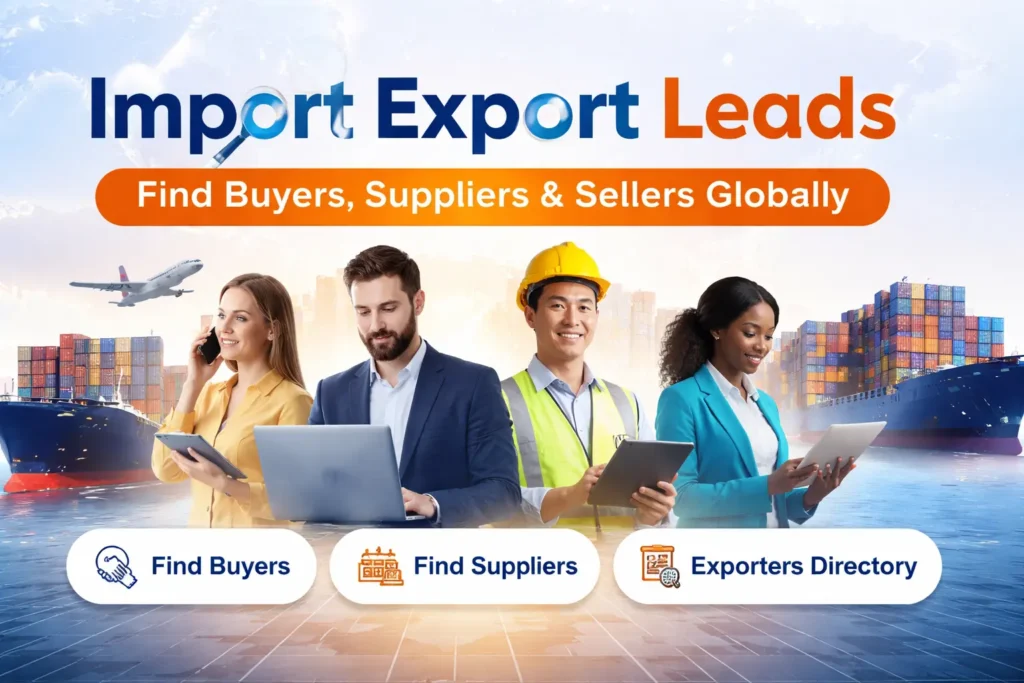
But here’s the truth—the global trade ecosystem is full of opportunities, and companies across the world are actively looking to:
- Find buyers for their products
- Find suppliers for consistent sourcing
- Find sellers to expand distribution networks
- Access verified exporters directory platforms
The real question is: Are you using the right strategy to tap into these opportunities?
Understanding Import Export Leads and Why They Matter
Before diving into strategies, let’s understand what import export leads actually mean.
What Are Import Export Leads?
Import export leads are verified business contacts of companies involved in international trade. These leads typically include:
- Buyer details (importers)
- Supplier information (exporters)
- Product demand data
- Shipment history and trade records
These leads help businesses:
✔ Expand into international markets
✔ Build long-term trade relationships
✔ Increase revenue and scalability
✔ Reduce dependency on local markets
Why Traditional Methods No Longer Work
Earlier, businesses relied on:
- Trade fairs
- Cold calling
- Local agents
- Manual directories
But now, these methods are:
- Time-consuming
- Expensive
- Low conversion rate
- Limited in global reach
Modern businesses need data-driven and digital-first approaches to stay competitive.
How to Find Buyers, Suppliers, and Sellers Effectively
Let’s break down how you can actually find buyers, suppliers, and sellers using smart strategies.
1. Use Exporters Directory Platforms
An exporters directory is one of the most powerful tools for global trade.
These directories provide:
- Verified exporter and importer lists
- Product-specific databases
- Country-wise trade insights
- Company contact details
Benefits:
- Saves time on research
- Gives access to global markets
- Improves lead quality
- Helps identify competitors
💡 Pro Tip: Always choose directories that provide updated and verified data to avoid fake leads.
2. Data-Based Platforms to Find Buyers
If your goal is to find buyers, you need access to real-time import data.
Look for platforms that offer:
- Shipment records
- Buyer purchasing patterns
- Import frequency
- Product demand trends
Why This Works:
Instead of guessing, you directly connect with companies that are already buying your product.
3. Smart Strategies to Find Suppliers
Finding the right supplier is crucial for maintaining product quality and consistency.
To find suppliers, you should:
- Use verified B2B platforms
- Check company certifications
- Analyze export history
- Compare pricing and MOQ
Best Practice:
Always start with small orders to test reliability before scaling.
4. How to Find Sellers and Distributors
If you are entering a new market, you need partners who can sell your product locally.
To find sellers, focus on:
- Local distributors
- Retail chains
- E-commerce resellers
- Trade agents
Key Tip:
Look for sellers who already deal in similar products—this increases your chances of faster sales.
5. Build a Multi-Channel Lead Generation System
Relying on just one source is risky. Instead, create a system that includes:
- Export-import databases
- LinkedIn outreach
- Email marketing
- Trade portals
- Industry networks
This ensures a consistent flow of high-quality import export leads.
Advanced Strategies to Generate High-Quality Import Export Leads
If you want to outperform competitors, go beyond basic methods.
Leverage Trade Data Analytics
Use analytics tools to:
- Identify high-demand products
- Track competitor shipments
- Discover new markets
- Predict trends
SEO for Import Export Business
Yes, SEO works in international trade too.
Target keywords like:
- import export leads
- exporters directory
- find buyers globally
- find suppliers international
Create blogs, landing pages, and guides to attract inbound leads organically.
Email Outreach That Converts
Cold emails still work—but only if done right.
Winning Formula:
- Personalized subject line
- Clear product offering
- Strong value proposition
- Call-to-action
Build Trust Before Selling
In global trade, trust is everything.
To build trust:
- Share certifications
- Provide samples
- Offer flexible payment terms
- Maintain transparent communication
Start Generating Import Export Leads Today
Now that you understand how the system works, it’s time to take action.
Step-by-Step Plan:
- Choose a reliable exporters directory
- Identify your target market and product demand
- Use data tools to find buyers
- Build a supplier network to find suppliers
- Connect with distributors to find sellers
- Start outreach through email and LinkedIn
- Track results and optimize your strategy
Final Thoughts
The import-export industry is no longer about luck—it’s about strategy, data, and execution.
Businesses that succeed are the ones that:
✔ Use smart tools to generate import export leads
✔ Leverage directories and databases
✔ Build strong global connections
✔ Continuously adapt to market trends
If you implement the strategies shared in this guide, you won’t just find leads—you’ll build a sustainable and scalable global trade business.
FAQs
1. What are import export leads?
Import export leads are verified business contacts of buyers, suppliers, and sellers involved in international trade. These leads help businesses connect globally and increase sales opportunities.
2. How can I find buyers for export business?
You can find buyers by using exporters directory platforms, trade databases, LinkedIn outreach, and import-export data tools that provide real-time buyer information and shipment records.
3. What is an exporters directory?
An exporters directory is a database that lists exporters, importers, and suppliers along with their contact details, products, and trade information to help businesses connect easily.
4. How do I find reliable suppliers internationally?
To find reliable suppliers, use verified B2B platforms, check certifications, review trade history, and start with small orders to test product quality and trustworthiness.
5. What is the best way to find sellers or distributors?
The best way to find sellers is through trade portals, local distributors, e-commerce platforms, and networking with businesses that already sell similar products in your target market.
6. Are import export leads useful for small businesses?
Yes, import export leads are extremely useful for small businesses as they help expand into global markets, find new customers, and grow revenue without heavy marketing costs.
7. Which tools are best for generating import export leads?
Popular tools include trade data platforms, exporters directories, B2B marketplaces, and CRM systems that help manage and track leads effectively.