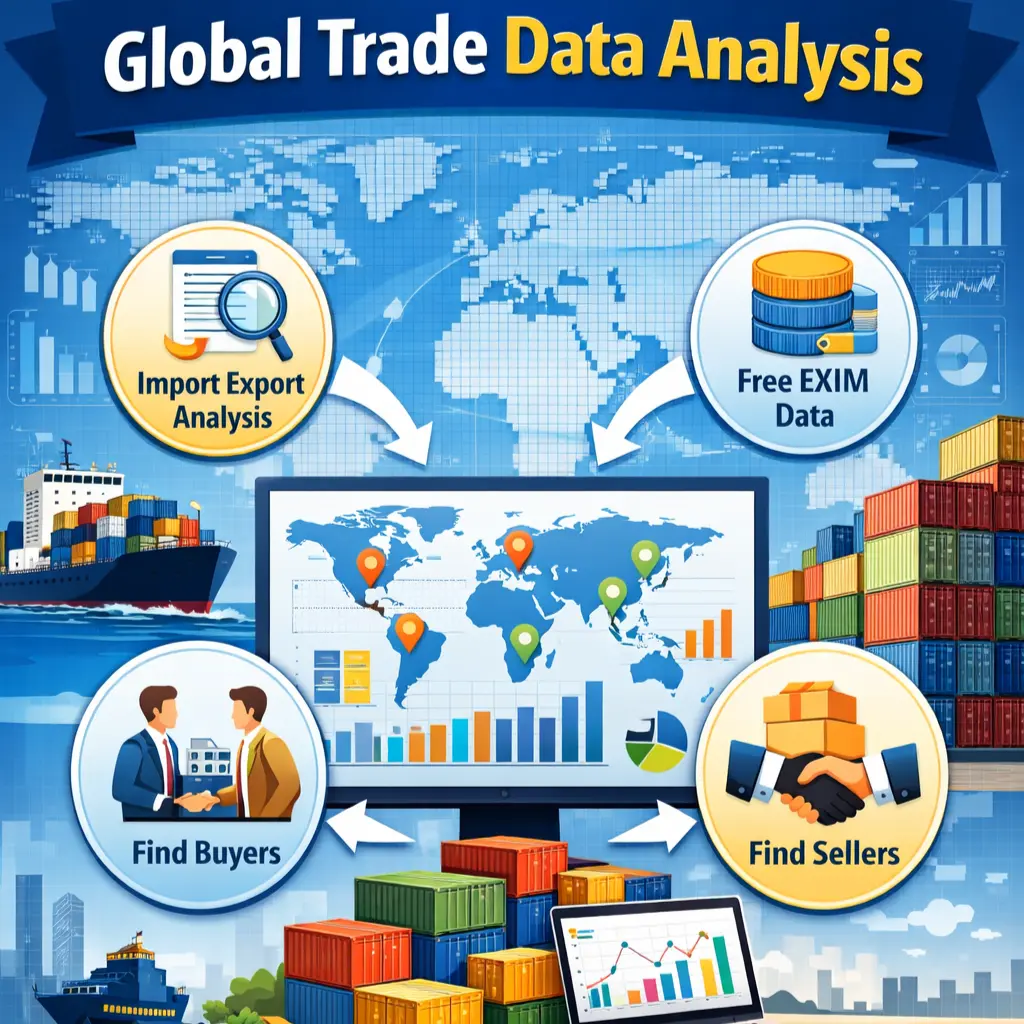
The last few decades have seen a tremendous increase in the volume of International commerce done by a multitude of countries around the World. Business firms that deal with the importing and exporting of products have to acquire and work with precise data and analysis of the market in order to remain viable and competitive. Find sellers Global trade data analysis provides the necessary market research and analysis for international trade.
Analyzing trade data provides market research and analysis firms and consultants with the means to provide accurate data for the following: researching and analyzing global market trade patterns and demand; determining the volume and location of shipments; evaluating the competition; and detecting potential buyers and sellers in the market. Global Trade Data Analysis Trade data analytics provides a competitive edge for companies seeking to globalize their operations. Find buyers
The analysis of trade data is being conducted by numerous companies around the World. Global Trade Data Analysis These businesses provide their clients with trade leads. The trade leads produced by the analysis of Global trade data provide businesses with new opportunities and reduce the potential risks associated with international trade.
Import Export Business Analysis
The analysis of imports and exports is the analysis and evaluation of international trade data. Specifically, it serves to analyze and evaluate market demand, capture rates, and the pricing of trade opportunities. The demand analysis of imported and exported products helps to evaluate the potential of trade in various countries. Import export business analysis
Comprehensive analysis allows businesses to understand:
> Which countries are the highest buyers for certain products
> Which companies are the largest buyers in the industry
> Which price ranges competitors are pricing their products
> How often the shipments are made
With enough research, businesses would understand how to create international trading plans and how to defend or capture market share from competitors in other countries.
Businesses that conduct import export analysis are the most likely to survive and thrive in constantly evolving markets. Import Export Data Services business analysis
Value of Free EXIM Data for International Business
For companies looking to start trading internationally, free EXIM data is invaluable. It provides data on global shipments classified by a variety of metrics including product types, names of importers and exporters, the volume of shipments, and trade value.
Utilizing free EXIM data, businesses are able to: Global Trade Data Analysis
> Perform market research
> Pinpoint active buyers and suppliers
> Evaluate the demand for particular products in distinct countries
> Study the shipping patterns of competitors
Free EXIM data is a gateway for many small and newly established companies seeking to trade internationally before they are able to utilize more sophisticated data tools.
Utilizing EXIM data properly minimizes risks associated with international trade. Free exim data
The Importance of Trade Data in International Business
The first and perhaps the most important function of trade data is the provision of an understanding of the global and regional dynamics of trade to different organizations. Trade data providers analyze customs records to make trade data available for trade and shipment insights. Global Trade Data Analysis
With this data, a firm is able to:
> track movements of competitors,
> understand the demand for a product in different locations,
> grasp the pricing of that product in different markets, and
> discover new markets.
If a firm recognizes that a specific product is demanded in a specific country, that firm may make the decision to start doing business in that country.
Trade data available to a firm means that the firm can make decisions that are a straight result of the trade data available to that firm.
Buyer Discovery in International Trade
Finding potential buyers is an incredibly difficult and important aspect of international trade. In order to expand an exporting business, finding dependable international buyers is critical. Global Trade Data Analysis
Here are four ways to find buyers:
1. Business to Business Trade Platforms
Electronic marketplaces in international trade allow sellers and buyers to connect.
2. Platforms that Analyze Trade Data
Trade data analysis can be used to find companies that import certain goods. Global Trade Data Analysis
3. Fairs of International Trade
Trade trade exhibitions, fairs, or markets are able to provide direct contact with potential buyers.
4. Databases of Importers
There are services that sell verified lists of international importers. Utilizing these approaches helps exporters strengthen their rapport with their customers and boost their sales in international markets. Find buyers
How to Find Sellers for Import Business
Positioning oneself in the marketplace is just as crucial for exporters as it is for importers. For import businesses, positioning oneself in the marketplace becomes increasingly important as they require vendors who can supply them with the best quality goods at the lowest possible prices. Find sellers
Some methods to position oneself in the marketplace include:
> Global Supplier Directories
> B2B Marketplaces
> Trade Data Platforms
> Industry Trade Exhibitions
Analyzing the shipment records and trade history of a seller will enable the importer to determine whether a potential seller is of good quality or not.
Sellers with good quality goods will maintain an uninterrupted supply of goods. This will lead to the continuous expansion of the business. Find buyers
Benefits of Global Trade Data Analysis
Global Trade Data Analysis provides a number of benefits for businesses operating in international trade.
Improved Market Understanding
Through the analysis of global trade data, businesses can gain a greater understanding of the demand and supply of goods at a global scale.
Understanding Competition
The data will also enable the businesses to keep track of their competitors and their methods.
Identifying Potential Customers
The businesses will be able to identify new buyers and sellers in the global marketplace. Global Trade Data Analysis
Risk Mitigation
The businesses will be able to identify the markets that are not profitable, so they can avoid them.
Market Expansion
The analysis will identify new markets that are reachable and also identify the markets that have a high demand for the businesses’ goods. Global Trade Data Analysis
Given these advantages, trade data analysis is a necessity for modern import and export businesses. Find sellers
Upcoming Trends in Data-Driven Import Export Business
The future of international commerce is predominantly focused on data. In fact, businesses that utilize precise data and analytics in their overall strategical approach will surpass their rivals.
How so, you might ask? With the advent of Artificial Intecllegence, data analytics, and automation, the overall Global Trade Data Analysis have become extremely predictive. In fact, businesses can now determine the present and future of market demands, analyze and emigrate competitor behavioral patterns, and pinpoint the intersections of trade at an unprecedented velocity. Find buyers
To put it all together, the businesses that embrace trade data intelligence will have the unprecedented capability of drawing in foreign markets, creating more prospects, and forging enduring professional connections with international buyers and sellers.
Conclusion
The world commerce is teeming with prospects for the businesses that have the audacity to embrace world markets. The data of global trade helps businesses in a number of ways – providing effective data driven analysis of the businesses’ import and export activities; offering valuable data of commerce, and presenting comprehensive data of trade analytics. Find sellers
The data driven tools of trade analytics enable the businesses to uncover international buyers and sellers. The data analytics, combined with predictive strategies, empower the businesses to establish global commerce pathways. The businesses are on the path of sustained profitability. Global Trade Data Analysis
Frequently Asked Questions (FAQs)
What is import export business analysis?
Import export business analysis is the process of studying international trade data to understand market demand, shipment trends, pricing strategies, and competitor activities. This analysis helps businesses identify profitable markets and make better decisions for global trade expansion.
What is free EXIM data and how is it useful?
Free EXIM data provides basic information about international shipments, including product details, importer names, exporter names, and shipment quantities. Businesses use this data for market research, competitor analysis, and identifying potential buyers and sellers in global markets.
How does trade data help import export businesses?
Trade data helps businesses track international shipments, analyze global demand, monitor competitor activities, and identify new market opportunities. With accurate trade data, companies can make data-driven decisions and improve their import export strategies.
How can exporters find buyers in international markets?
Exporters can find buyers using B2B trade platforms, trade data tools, importers databases, and international trade fairs. Analyzing trade data also helps identify companies that regularly import specific products.
How can importers find reliable sellers?
Importers can find reliable sellers through supplier directories, B2B marketplaces, trade exhibitions, and global trade data platforms. Checking supplier shipment history and trade records helps ensure reliability.
Why is global trade data analysis important for businesses?
Global trade data analysis helps businesses understand international market trends, identify high-demand products, monitor competitors, and generate new business leads. It plays a crucial role in expanding import export operations.